
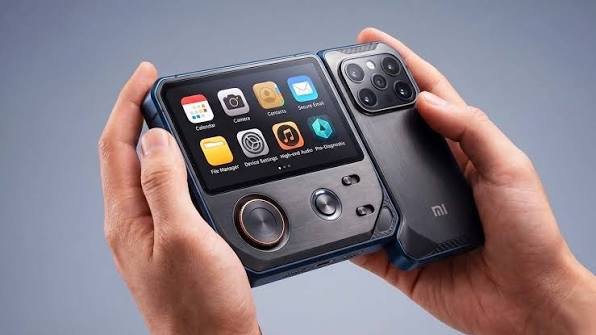
Technology has changed the way people live in ways that would have seemed impossible just a few decades ago.
Today, a small smartphone can replace a camera, map, notebook, music player, calculator, calendar, television remote, and even a traditional wallet. Smartwatches can monitor activity and display important notifications, while wireless earbuds make communication and entertainment easier wherever we go.
But modern gadgets are doing more than adding convenience.
They are changing how people work, travel, communicate, organize their homes, and manage everyday tasks.
Artificial intelligence, wireless connectivity, cloud services, sensors, and increasingly powerful processors are making devices smarter and more useful. Many gadgets can now automate repetitive tasks, provide information instantly, and adapt to the user’s needs.
Whether you work from home, travel regularly, or simply want a more convenient household, modern technology offers tools that can save time and reduce everyday frustrations.
So, how are modern gadgets making work, travel, and home life better?
Let’s explore some of the most useful ways technology is improving everyday life.
How Gadgets Are Changing Everyday Life
Modern gadgets are becoming smaller, faster, and more connected.
A device no longer has to perform only one function. Instead, a single gadget can provide multiple services and communicate with other devices.
For example, a smartphone can connect to a smartwatch, wireless earbuds, laptop, car, television, smart home system, and cloud services.
This connected approach makes it possible to move between different activities more easily.
You can begin a task on your computer, continue it on your phone, receive a notification on your watch, and communicate with someone through wireless earbuds.
The result is an increasingly connected digital lifestyle.
Modern Gadgets for Better Work
Technology has transformed the workplace.
Whether employees work in an office, from home, or while traveling, gadgets can help them communicate, organize information, attend meetings, and complete tasks more efficiently.
1. Smartphones Keep Workers Connected
The smartphone remains one of the most important work gadgets.
Modern smartphones can handle email, messaging, video meetings, calendars, document editing, file sharing, online banking, authentication, and countless other tasks.
For people who work remotely or travel frequently, smartphones provide a convenient way to remain connected without carrying a full computer everywhere.
Business applications can also turn a smartphone into a mobile productivity tool.
Employees can respond to urgent messages, review documents, check schedules, and communicate with colleagues from almost anywhere.
However, constant connectivity can also make it difficult to disconnect from work.
The goal should be to use technology as a productivity tool rather than allowing notifications to control the entire day.
2. Laptops Make Flexible Work Possible
Laptops have become essential for modern work.
Compared with desktop computers, laptops provide the flexibility to work from different locations.
Modern laptops are increasingly powerful while remaining lightweight and portable.
Many also include AI-focused hardware that can support intelligent features such as video-call enhancements, voice processing, image editing, and productivity applications.
For remote workers, a good laptop can effectively become a portable office.
Combined with cloud storage, video conferencing, collaboration software, and wireless accessories, it allows people to work without being tied to a traditional desk.
3. Wireless Earbuds Improve Communication
Wireless earbuds are useful for more than listening to music.
They have become valuable work accessories because they make calls and meetings easier.
Noise cancellation can help reduce background sounds in busy environments.
Built-in microphones can also make conversations more convenient when working away from a traditional office.
For people who move between meetings throughout the day, wireless earbuds can make communication more flexible.
AI is also beginning to appear in audio devices, including features designed to improve voice processing, transcription, and translation.
4. Portable Monitors Increase Productivity
Working from a laptop can sometimes feel restrictive because of the limited screen space.
Portable monitors provide a simple solution.
A lightweight external display can give travelers or remote workers a second screen without requiring a permanent desk setup.
This can be particularly useful for comparing documents, managing spreadsheets, editing content, programming, or keeping communication tools open while working on another task.
For people who travel for work, portability is often more important than having the largest possible display.
5. Smartwatches Help Manage Notifications
A smartwatch can provide quick access to notifications without requiring the user to constantly check their phone.
Calendar reminders, incoming messages, calls, and other alerts can appear directly on the wrist.
This can help people decide whether something requires immediate attention.
Smartwatches can also provide timers, alarms, reminders, navigation, and other useful tools.
The key benefit is convenience.
Instead of reaching for a smartphone every few minutes, users can glance at their wrist and decide whether further action is necessary.
Modern Gadgets for Better Travel
Travel can be exciting, but it can also involve planning, navigation, communication, charging, and keeping track of important items.
Modern gadgets can simplify many of these challenges.
6. Smartphones Make Travel Easier
A smartphone can act as a digital travel assistant.
Travelers can use it for:
- Maps and navigation
- Flight information
- Hotel reservations
- Digital boarding passes
- Translation
- Currency conversion
- Restaurant searches
- Travel planning
- Photography
- Emergency communication
Instead of carrying a folder full of printed documents, travelers can store much of their information digitally.
However, travelers should still consider what happens if their phone battery dies or internet access becomes unavailable.
Keeping important information available offline and carrying a backup charging solution can be helpful.
7. Smartwatches Are Useful Travel Companions
Smartwatches can provide useful travel information without requiring travelers to constantly take out their phones.
Navigation directions can appear on the wrist.
Travelers can receive notifications about transportation or appointments.
Timers and alarms can help manage schedules.
Fitness and activity tracking can also be useful during trips.
For travelers exploring unfamiliar cities, having basic navigation information available on the wrist can be convenient.
8. Noise-Canceling Headphones Make Journeys More Comfortable
Airports, trains, buses, and airplanes can be noisy.
Noise-canceling headphones and earbuds can help create a quieter environment.
Travelers can listen to music, podcasts, movies, or audiobooks while reducing the impact of surrounding noise.
Some models also provide transparency modes that allow users to hear important sounds without removing their headphones.
This combination of noise reduction and awareness can make long journeys more comfortable.
9. Portable Chargers Prevent Battery Anxiety
One of the biggest travel problems with modern technology is battery life.
A dead smartphone can mean losing access to maps, boarding information, communication, and other important tools.
Portable power banks can provide additional battery capacity while traveling.
For frequent travelers, a reliable power bank can be one of the most useful gadgets to carry.
It is also important to check airline rules before traveling with larger batteries and power banks.
10. Universal Travel Adapters Reduce Hassle
International travelers may encounter different electrical outlets depending on the country they visit.
A universal travel adapter can help solve this problem.
Some modern travel adapters also include USB or USB-C charging ports, allowing travelers to charge several devices from one outlet.
This can reduce the number of chargers and adapters that need to be packed.
11. Smart Luggage Trackers Help Find Bags
Lost luggage can quickly turn a good trip into a stressful experience.
Small tracking devices can help travelers locate bags and other important belongings.
A tracker placed inside luggage can provide an additional layer of reassurance if a bag is misplaced.
These devices can also be useful for keys, backpacks, wallets, and other everyday items.
They are particularly helpful for travelers who frequently move between airports, hotels, rental cars, and other locations.
12. Translation Gadgets Break Down Language Barriers
Language can be one of the biggest challenges when traveling internationally.
Translation technology has improved significantly.
Smartphones, earbuds, and dedicated translation devices can help travelers communicate with people who speak different languages.
AI-powered translation is making these tools increasingly natural.
Real-time translation could become especially useful in restaurants, transportation, hotels, shops, and everyday conversations.
While translation technology is not perfect, it can make international travel much easier.
Modern Gadgets for a Smarter Home
Technology is also changing what happens inside our homes.
Smart home devices can automate tasks, improve comfort, increase convenience, and provide additional information.
13. Smart Speakers Make Everyday Tasks Easier
Smart speakers can respond to voice commands and provide access to information and connected services.
People can use them to set timers, create reminders, play music, check weather information, control compatible smart home devices, and more.
Voice control can be particularly useful when your hands are occupied.
For example, you can ask a smart speaker to set a cooking timer while preparing a meal.
14. Smart Lights Save Time
Smart lighting allows homeowners to control lights through smartphones, voice commands, schedules, or automation.
Instead of manually switching every light on and off, users can create routines.
Lights can automatically turn on at particular times or respond to other smart home conditions.
Some systems also allow users to adjust brightness and color.
This can make lighting more convenient and potentially help reduce unnecessary energy use.
15. Smart Thermostats Improve Home Comfort
Heating and cooling systems account for a significant portion of household energy consumption.
Smart thermostats can make temperature management more convenient.
Depending on the system, they can learn schedules, respond to settings, provide remote control, and use sensors to understand occupancy.
Instead of leaving the heating or cooling system running according to a fixed schedule, homeowners can adjust settings based on their routines.
The result can be greater convenience and potentially improved energy efficiency.
16. Robot Vacuums Automate Cleaning
Cleaning is one of the most repetitive household tasks.
Robot vacuum cleaners can automate part of the process.
Modern models can use sensors, cameras, mapping technology, and software to navigate rooms and avoid obstacles.
Some models can also mop floors.
For busy households, this can save time that would otherwise be spent performing routine cleaning.
The technology is not perfect, and robot vacuums still require maintenance, but they can reduce the amount of manual cleaning required.
17. Smart Security Cameras Provide Peace of Mind
Smart cameras and video doorbells can help homeowners monitor their properties.
Depending on the device, users may receive notifications when motion is detected or when someone approaches the door.
Some systems use AI to distinguish between different types of activity.
Remote access means homeowners can check their property while away.
However, smart security devices should be configured carefully.
Strong passwords, secure networks, software updates, and privacy settings are important because cameras and microphones can collect sensitive information.
18. Smart Appliances Can Automate Household Tasks
Connected appliances are becoming increasingly common.
Smart washing machines, refrigerators, ovens, coffee makers, and other appliances can provide remote controls, notifications, scheduling, and automation.
For example, a connected appliance may notify the user when a cycle is complete.
The benefit is not necessarily that every appliance needs an internet connection.
Instead, smart appliances can be useful when connectivity solves a specific problem.
AI Is Making Gadgets Smarter
Artificial intelligence is one of the biggest changes affecting modern gadgets.
Previously, many smart devices simply followed programmed instructions.
AI allows devices to analyze information and respond in more flexible ways.
For example, an AI-powered camera can recognize objects.
A smartwatch can analyze patterns in activity data.
A smartphone can summarize information.
A smart speaker can understand natural language.
A robot vacuum can identify obstacles.
This combination of hardware and AI is creating a new generation of technology.
On-Device AI Is Changing Gadgets
Another important development is on-device AI.
Some AI processing can happen directly on a smartphone, smartwatch, computer, or other gadget instead of relying completely on cloud servers.
This can reduce delays and may provide privacy benefits for certain tasks.
It can also allow some AI features to work with limited connectivity.
As processors become more efficient, more devices are likely to gain AI capabilities.
This could make everyday gadgets increasingly intelligent without requiring constant interaction with large cloud systems.
How Gadgets Can Save Time
One of the biggest advantages of modern technology is automation.
Small amounts of saved time can add up.
A smartwatch can remind you about an appointment.
A smart home can turn lights on automatically.
A robot vacuum can clean while you work.
A smartphone can organize information.
A travel app can store boarding details.
A wireless earbud can help with a phone call while your hands remain free.
Individually, these may seem like small improvements.
Together, they can make daily life more efficient.
The Importance of Digital Convenience
Modern gadgets are increasingly designed around convenience.
People expect technology to work quickly and require fewer steps.
This is why voice commands, wireless connections, automatic updates, cloud synchronization, and AI assistants are becoming more common.
The best technology often feels simple.
Users do not necessarily want to understand how every component works.
They simply want the device to solve a problem reliably.
Are Modern Gadgets Always Better?
Not necessarily.
Technology can make life easier, but it can also introduce new problems.
Too many notifications can become distracting.
Connected devices can create privacy concerns.
Subscriptions can increase the cost of ownership.
Complex smart home systems can be frustrating to maintain.
People can also become overly dependent on technology.
For these reasons, the goal should not be to fill your home, office, or travel bag with as many gadgets as possible.
Instead, choose devices that provide genuine value.
How to Choose the Right Gadgets
Before buying a new gadget, ask yourself a few simple questions.
Does It Solve a Real Problem?
A device should have a practical purpose.
Will I Use It Regularly?
A gadget that sounds exciting but sits unused is usually not a good investment.
Does It Work With My Existing Devices?
Compatibility can make a major difference.
Is It Secure?
Look for products with reliable software updates and strong security features.
How Long Will It Last?
Durability and long-term software support are important considerations.
Is the Cost Worth the Convenience?
Calculate the total cost, including accessories, subscriptions, and potential maintenance.
The Future of Everyday Gadgets
The future of consumer technology will likely involve even greater integration between devices.
Instead of operating independently, gadgets will increasingly communicate with each other.
Your smartwatch could interact with your smartphone.
Your smartphone could control your car.
Your car could communicate with your home.
Your smart home could automatically adjust itself based on your routine.
AI could become the layer connecting all of these systems.
This could create a more seamless digital environment where technology works quietly in the background.
The challenge will be making these systems simple enough that users remain in control.
Conclusion
Modern gadgets are changing everyday life in meaningful ways.
At work, smartphones, laptops, wireless earbuds, smartwatches, and portable monitors can make communication and productivity more flexible.
While traveling, smartphones, smartwatches, noise-canceling headphones, portable chargers, tracking devices, travel adapters, and translation tools can reduce stress and make journeys easier.
At home, smart speakers, connected lighting, smart thermostats, security cameras, robot vacuums, and intelligent appliances can automate everyday tasks.
Artificial intelligence is making many of these devices even more capable.
The biggest benefit of modern technology is not necessarily having the most advanced gadget.
It is having the right technology for the right situation.
A useful gadget should save time, reduce effort, improve communication, increase comfort, or solve a genuine everyday problem.
As AI, wireless connectivity, sensors, and smart software continue to develop, gadgets will likely become even more personalized and interconnected.
The future may not be about carrying more technology.
Instead, it may be about technology becoming so useful and seamless that it quietly works in the background while people focus on the things that matter most.
Frequently Asked Questions About Modern Gadgets
How are modern gadgets improving everyday life?
Modern gadgets can save time, automate repetitive tasks, improve communication, support productivity, simplify travel, increase home comfort, and provide easier access to information.
What gadgets are useful for working from home?
Useful work-from-home gadgets include laptops, external monitors, webcams, wireless headphones, keyboards, mice, smartwatches, and portable charging devices.
What are the best gadgets for travelers?
Popular travel gadgets include smartphones, smartwatches, noise-canceling headphones, portable chargers, universal travel adapters, luggage trackers, and translation devices.
How can smart gadgets improve home life?
Smart home gadgets can automate lighting, temperature control, cleaning, security, entertainment, and other household activities.
Are AI gadgets useful?
AI gadgets can be useful when their artificial intelligence features solve practical problems such as organizing information, recognizing objects, improving communication, automating tasks, or providing personalized assistance.
Can smart home devices save money?
Some smart devices can potentially reduce unnecessary energy use through automation and better control. However, savings depend on the device, household behavior, energy prices, and how the technology is configured.
Are smart gadgets safe?
Smart gadgets can be safe when properly configured, but internet-connected devices can create security and privacy risks. Users should use strong passwords, update software, and review privacy settings.
Do I need a smart home to benefit from modern technology?
No. You do not need a fully connected home. Even one useful device, such as a smart thermostat, robot vacuum, or smart speaker, can provide convenience.
How does AI make gadgets better?
AI allows gadgets to analyze information, recognize patterns, understand language, personalize experiences, and automate certain tasks.
What will everyday gadgets look like in the future?
Future gadgets are likely to become smaller, more connected, more personalized, and more AI-powered. Wearables, smart home devices, intelligent vehicles, and AI assistants may increasingly work together as one connected ecosystem.