
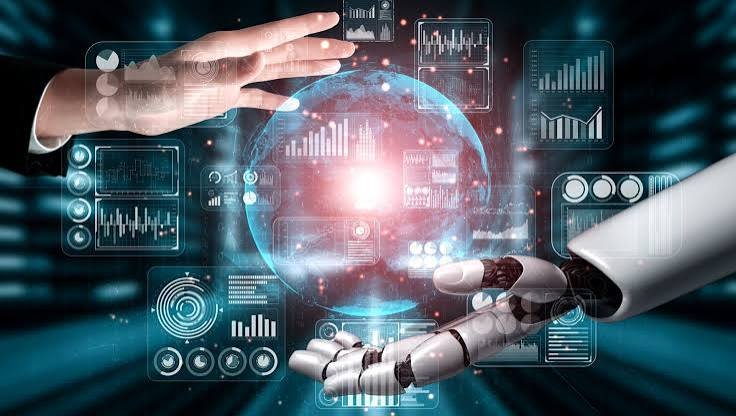
Technology is changing at an incredible speed.
Ideas that once seemed like science fiction are becoming practical tools that people and businesses can use every day. Artificial intelligence can generate content and analyze information, smart devices can monitor our surroundings, cloud platforms allow people to work from almost anywhere, and increasingly powerful computers are opening doors to new possibilities.
These changes are not happening in isolation.
Several technologies are developing at the same time, and their combination could have a major impact on how we live, work, communicate, travel, shop, learn, and solve problems.
Understanding the biggest technology trends shaping our future is therefore about more than following the latest gadgets. It is about understanding the direction in which society and the digital economy are moving.
Some technologies will become part of everyday life almost unnoticed. Others may completely transform industries.
From artificial intelligence and robotics to renewable energy, smart devices, cybersecurity, biotechnology, and advanced computing, the future is likely to be shaped by a combination of digital and physical innovation.
In this article, we explore some of the most important technology trends to watch and what they could mean for everyday life.
Why Technology Trends Matter
Technology influences almost every part of modern society.
Businesses depend on software and digital communication. Consumers use smartphones and connected devices. Governments rely on digital infrastructure. Schools use online learning platforms. Hospitals increasingly depend on sophisticated information systems.
When technology changes, these systems change with it.
A new technology can create opportunities for businesses, improve convenience for consumers, and introduce entirely new products and services.
At the same time, technological progress can create challenges involving privacy, security, employment, environmental impact, and access.
Understanding technology trends can help people prepare for both the opportunities and the challenges ahead.
1. Artificial Intelligence Will Continue to Transform Technology
Artificial intelligence is one of the most important technology trends shaping the future.
AI systems are becoming capable of understanding language, analyzing information, recognizing images, generating content, assisting with programming, and supporting decision-making.
AI is increasingly being built into software people already use.
Instead of being a separate technology that only specialists interact with, artificial intelligence is becoming a general-purpose tool.
Businesses can use AI for customer service, marketing, data analysis, research, and automation.
Individuals can use it for writing, brainstorming, organization, learning, and other everyday tasks.
The Growth of AI Assistants
One important development is the rise of AI assistants that can perform more than simple question answering.
Future assistants may be able to coordinate multiple tasks, interact with software, organize information, and complete routine workflows.
This could change how people interact with computers.
Instead of learning how every application works, users may increasingly describe what they want in natural language.
2. Generative AI Will Change Content Creation
Generative AI can produce text, images, audio, video, presentations, and computer code.
This technology is already changing creative and professional workflows.
A marketer can create a first draft of an advertising campaign.
A writer can brainstorm article ideas.
A designer can explore different concepts.
A developer can receive help with coding tasks.
A student can use AI to explain difficult concepts.
The future will likely involve more collaboration between humans and generative AI.
Human creativity, experience, and judgment will remain important because AI-generated content still needs review and refinement.
3. AI Agents Could Automate Complex Tasks
The next stage of AI may involve systems that can perform multi-step tasks independently.
An AI agent could potentially gather information, make decisions based on predefined instructions, interact with other software, and complete a workflow.
For businesses, this could automate many administrative processes.
For individuals, it could make digital assistants more useful.
However, AI agents also introduce important questions about security, reliability, accountability, and control.
As these systems become more capable, responsible design will be essential.
4. Robotics Will Become More Capable
Robots are moving beyond traditional industrial environments.
Advances in sensors, artificial intelligence, computer vision, and machine learning are making robots more capable of operating in unpredictable environments.
Robotics could become increasingly important in:
- Manufacturing
- Warehousing
- Agriculture
- Logistics
- Healthcare
- Construction
- Home assistance
- Disaster response
Humanoid robots are also receiving increased attention.
Whether they become common household tools remains uncertain, but advances in robotics could change many physical tasks over time.
5. Smart Homes Will Become More Intelligent
Smart home technology has already introduced connected lights, thermostats, cameras, locks, appliances, and speakers.
The next generation of smart homes may become more automated.
Instead of controlling every device manually, systems may learn routines and respond to context.
For example, a smart home might adjust temperature, lighting, security, and energy consumption based on occupancy and user preferences.
AI could make these systems more responsive.
However, connected homes also create privacy and cybersecurity concerns.
The more devices connected to the internet, the more important security becomes.
6. The Internet of Things Will Continue to Expand
The Internet of Things, commonly called IoT, refers to physical devices connected to digital networks.
These devices can collect data, communicate with other systems, and sometimes make automated decisions.
IoT technology is used in homes, factories, farms, transportation systems, and cities.
Future IoT systems may become more intelligent as sensors become cheaper and AI becomes more powerful.
Connected devices could help businesses monitor equipment, reduce waste, predict maintenance needs, and improve efficiency.
7. Edge Computing Will Bring Data Processing Closer
Cloud computing has transformed the internet, but not every piece of information needs to travel to a distant data center.
Edge computing processes some information closer to where it is generated.
This can reduce latency and potentially improve performance.
Edge computing can be particularly useful for autonomous vehicles, industrial systems, smart cities, connected devices, and applications that require rapid responses.
As billions of devices become connected, edge computing may become increasingly important.
8. Quantum Computing Could Open New Possibilities
Quantum computing is an emerging area of computing based on principles of quantum mechanics.
Unlike traditional computers, quantum computers use quantum systems to perform certain types of calculations in fundamentally different ways.
Quantum computing is still in an early stage.
It is not expected to replace ordinary computers for everyday tasks.
Instead, its potential lies in specialized problems involving areas such as materials science, optimization, chemistry, and cryptography.
If practical quantum computers become sufficiently powerful, they could have significant effects on science and industry.
9. Cybersecurity Will Become More Advanced
As technology becomes more connected, cybersecurity becomes increasingly important.
Individuals have more online accounts and devices.
Businesses store enormous amounts of digital information.
Connected infrastructure can affect physical systems as well as computers.
Future cybersecurity systems will likely rely more heavily on artificial intelligence and automation.
Security tools may monitor large amounts of activity and identify unusual patterns quickly.
At the same time, attackers will also gain access to more sophisticated technologies.
This means cybersecurity will remain an ongoing technological race.
10. Passwordless Authentication Will Grow
Traditional passwords are inconvenient and often insecure.
The technology industry is increasingly exploring alternatives such as passkeys, biometrics, security keys, and device-based authentication.
Passwordless systems can make login processes simpler while reducing some common password-related risks.
As adoption grows, people may gradually rely less on memorized passwords.
This could make online accounts easier and safer to access.
11. 5G and Future Connectivity Will Support New Applications
Faster and more reliable wireless networks can enable new digital experiences.
High-speed connectivity supports video streaming, cloud applications, connected devices, remote collaboration, and other services.
Future generations of wireless technology may provide improvements in speed, latency, capacity, and reliability.
Better connectivity could also support advanced applications involving autonomous systems, industrial automation, augmented reality, and smart infrastructure.
12. Augmented Reality and Virtual Reality Will Evolve
Augmented reality and virtual reality have been discussed for years, but their applications continue to develop.
Virtual reality can create immersive digital environments.
Augmented reality overlays digital information onto the physical world.
Potential uses include:
- Education
- Training
- Gaming
- Healthcare
- Design
- Retail
- Remote assistance
- Tourism
The technology may become more practical as devices become lighter, more comfortable, and more powerful.
13. Wearable Technology Will Become Smarter
Smartwatches and fitness trackers have already become mainstream.
Future wearable devices could provide more sophisticated health, communication, navigation, and productivity features.
Wearables may increasingly use AI to interpret information and provide personalized insights.
Other forms of wearable technology could include smart glasses, connected earbuds, and specialized devices for professional use.
Privacy will remain an important issue because wearable devices can collect highly personal information.
14. Biotechnology and Technology Will Become More Connected
The future of technology is not limited to computers.
Advances in biotechnology are creating new possibilities in medicine, agriculture, food production, and scientific research.
Computing can help researchers analyze biological information more quickly.
AI can assist with drug discovery and scientific modeling.
New tools may also help scientists understand complex biological systems.
The combination of biotechnology, AI, and advanced computing could produce some of the most significant innovations of the coming decades.
15. Digital Health Technology Will Continue Growing
Technology is changing healthcare through digital records, remote consultations, wearable devices, monitoring systems, and AI-assisted analysis.
Patients can increasingly access health information through digital platforms.
Wearable devices can monitor various measurements.
Remote communication can make healthcare more accessible in some situations.
AI may also assist professionals with analyzing information and identifying patterns.
However, healthcare technology requires particularly strong attention to accuracy, privacy, security, and human oversight.
16. Autonomous Vehicles Will Continue to Develop
Self-driving technology has attracted significant attention.
Autonomous vehicles use sensors, software, artificial intelligence, maps, and computing systems to understand their environment and make driving decisions.
Fully autonomous transportation remains a complex technical and regulatory challenge.
Even so, automated driving technologies are likely to continue developing.
Future transportation systems may combine human drivers with increasingly advanced driver-assistance features and autonomous systems.
17. Electric Transportation Will Expand
The transition toward electric vehicles is another important technology trend.
Electric cars, buses, bicycles, trucks, and other forms of transportation are developing rapidly.
Advances in batteries, charging infrastructure, software, and vehicle design could improve electric transportation.
The technology could also become more integrated with energy systems.
For example, vehicles may eventually play a larger role in storing and managing electricity.
18. Renewable Energy Technology Will Improve
Energy is one of the most important challenges facing the future.
Solar, wind, battery storage, and other clean-energy technologies continue to develop.
Improved batteries can help store electricity when renewable sources are not producing enough energy.
Smart energy systems can also help balance supply and demand.
Technology will play a major role in making energy systems more efficient and resilient.
19. Sustainable Technology Will Become More Important
Environmental concerns are influencing technology development.
Companies are increasingly looking for ways to reduce energy consumption, material waste, and environmental impact.
Data centers, electronics manufacturing, transportation, and industrial systems all require significant resources.
Future technology will likely place greater emphasis on efficiency, recycling, renewable energy, and sustainable design.
Consumers may also increasingly consider environmental impact when purchasing technology.
20. Cloud Computing Will Become More Intelligent
Cloud computing is already fundamental to modern digital services.
The next stage will involve more intelligent cloud platforms.
AI can help organizations analyze data, optimize computing resources, automate workflows, and improve security.
Cloud systems will also increasingly connect with edge devices.
Instead of choosing between cloud and edge computing, many organizations will use both.
21. Software Development Will Become More Automated
AI-assisted programming is changing software development.
Developers can use AI tools to generate code, explain existing systems, create tests, identify potential bugs, and explore solutions.
This could allow software teams to build applications faster.
However, professional development will still require architecture, testing, security, and human judgment.
The role of developers may shift toward solving higher-level problems while AI handles more repetitive coding tasks.
22. Low-Code and No-Code Tools Will Expand
Not everyone who needs software is a programmer.
Low-code and no-code platforms allow people to build applications and automated workflows using visual tools.
These systems can help businesses create internal applications without requiring every project to go through a traditional development process.
As these platforms improve, more employees may become involved in creating digital solutions.
23. Digital Twins Will Improve Real-World Systems
Digital twins are digital models of physical objects, machines, buildings, or systems.
They can be used to monitor real-world conditions and simulate possible changes.
Manufacturers can use digital twins to understand equipment.
Cities can model infrastructure.
Businesses can test scenarios before making expensive physical changes.
As sensors and AI improve, digital twins could become more detailed and useful.
24. The Future Will Be More Personalized
Technology is becoming increasingly customized to individual users.
AI can analyze preferences, behavior, and context to provide personalized recommendations.
This is already common in entertainment, shopping, advertising, and digital services.
Future systems may personalize productivity tools, education, transportation, and other experiences.
The challenge will be balancing convenience with privacy.
25. Human-AI Collaboration Will Become Normal
Perhaps the most important trend is not technology replacing people.
It is technology working alongside people.
AI can process large amounts of information quickly.
Humans bring creativity, empathy, context, judgment, and responsibility.
The strongest future workplaces may combine both.
Instead of asking whether AI or humans are better, businesses may increasingly ask how the two can work together effectively.
How These Technology Trends Could Change Everyday Life
The technologies discussed above may seem separate, but they are increasingly connected.
Imagine a future home with smart appliances, AI assistants, connected security systems, energy management, and wearable devices.
Your transportation could communicate with infrastructure.
Your workplace could use AI assistants and automation.
Your devices could synchronize information automatically.
Your energy system could use software to manage consumption.
These changes could make everyday life more convenient.
But convenience will need to be balanced with privacy, security, affordability, and user control.
How Businesses Can Prepare for the Future
Businesses should avoid chasing every new technology.
Instead, they should focus on trends that are relevant to their industry.
Companies can prepare by:
- Investing in digital skills
- Improving cybersecurity
- Exploring useful AI applications
- Modernizing outdated systems
- Training employees
- Improving data management
- Evaluating automation opportunities
- Planning for changing customer expectations
The most adaptable businesses will likely have an advantage.
Skills That Will Matter in the Future
As technology changes, the skills people need will change too.
Technical skills will remain valuable, but human skills will also become increasingly important.
Future workers may benefit from:
- Critical thinking
- Problem-solving
- Communication
- Creativity
- Digital literacy
- Data literacy
- AI literacy
- Adaptability
- Collaboration
The ability to learn continuously may become one of the most important skills of all.
Challenges of Future Technology
Technological progress brings challenges.
Privacy is one concern.
As devices become more connected, they can collect more information.
Cybersecurity is another.
More connected systems can create more potential points of attack.
Employment is also an important consideration.
Automation may change the tasks people perform and create demand for new skills.
There are also questions about inequality.
Not everyone has equal access to advanced technology.
The future of technology therefore requires not only innovation but responsible development.
What the Future of Technology Could Look Like
The future will probably not be defined by one single invention.
Instead, it will be shaped by the combination of many technologies.
AI will interact with cloud computing.
Robotics will use AI.
Smart homes will connect to energy systems.
Wearable devices will communicate with software.
Autonomous vehicles will depend on sensors, connectivity, and intelligent algorithms.
Biotechnology will benefit from advanced computing.
This convergence could produce innovations that are difficult to predict today.
Conclusion
The future of technology is likely to be intelligent, connected, automated, personalized, and increasingly integrated into everyday life.
Artificial intelligence and generative AI are already changing software.
Robotics could transform physical work.
Smart devices are connecting homes, businesses, and cities.
Cloud and edge computing are creating powerful digital infrastructure.
Cybersecurity and privacy are becoming increasingly important.
Wearables, biotechnology, renewable energy, electric transportation, augmented reality, and advanced computing could also have major impacts in the years ahead.
But the future is not simply about having more advanced technology.
It is about using technology responsibly.
The most successful innovations will be those that solve real problems, improve people’s lives, and create meaningful value without sacrificing security, privacy, or human control.
For individuals, the best preparation is to remain curious and adaptable.
For businesses, it is to understand emerging technologies and determine where they can provide genuine advantages.
Technology will continue to evolve, often faster than we expect.
The people and organizations that learn how to adapt will be best positioned to benefit from it.
Ultimately, the biggest technology trend shaping our future may be the growing relationship between humans and intelligent machines.
The future will not simply belong to technology.
It will belong to the people who learn how to use technology wisely.
Frequently Asked Questions About Future Technology Trends
What are the biggest technology trends shaping the future?
Major trends include artificial intelligence, generative AI, AI agents, robotics, cloud computing, edge computing, cybersecurity, quantum computing, smart devices, biotechnology, renewable energy, electric transportation, and augmented reality.
What technology will have the biggest impact on the future?
Artificial intelligence is likely to have a particularly broad impact because it can be integrated into many industries and types of software. However, its impact will also depend on developments in computing, robotics, energy, biotechnology, and other fields.
How will AI change everyday life?
AI may help people automate routine tasks, find information, create content, manage schedules, personalize services, and interact with digital systems using natural language.
Will robots replace human workers?
Robots may automate some physical tasks, but they are also likely to create new roles and change existing jobs. Human judgment, creativity, communication, and problem-solving will remain important.
What is the Internet of Things?
The Internet of Things refers to physical devices connected to digital networks that can collect, exchange, and sometimes act on information.
What is edge computing?
Edge computing processes some data closer to where it is generated rather than sending everything to a distant cloud data center. This can reduce delays and improve performance for certain applications.
Will quantum computers replace normal computers?
Quantum computers are not expected to replace ordinary computers for everyday tasks. Their potential is primarily in specialized calculations that are difficult for traditional computing systems.
How will technology affect future jobs?
Technology is likely to automate some tasks while creating demand for new skills and occupations. Workers who develop digital literacy, critical thinking, creativity, and adaptability may be better prepared for changing workplaces.
Why will cybersecurity become more important?
As more devices, businesses, and infrastructure become connected, more valuable information and systems will depend on digital technology. Protecting those systems will therefore become increasingly important.
What will smart homes look like in the future?
Future smart homes may use AI and connected devices to automatically manage lighting, temperature, security, appliances, and energy consumption according to user preferences and circumstances.
Will electric vehicles become more common?
Electric transportation is likely to continue expanding as battery technology, charging infrastructure, vehicle design, and energy systems improve.
How can people prepare for future technology?
Stay curious, develop digital skills, learn about AI and cybersecurity, understand how new technologies affect your industry, and focus on developing skills that remain valuable even as tools change.
What will technology look like in 10 years?
No one can predict the future precisely, but technology is likely to become more intelligent, connected, automated, personalized, and integrated into physical environments. AI, robotics, advanced computing, biotechnology, and clean energy could all play important roles.