
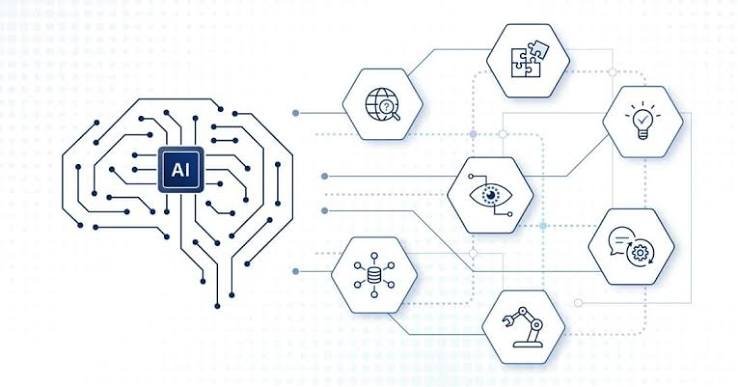
Artificial Intelligence has become one of the most important technologies of the modern world. AI can write text, recognize images, analyze data, translate languages, recommend products, generate ideas, and perform many tasks that once seemed possible only for humans.
As AI systems become more capable, an interesting question continues to attract attention:
How is artificial intelligence different from human intelligence?
At first glance, the two may appear surprisingly similar. Both can process information, solve problems, recognize patterns, and produce useful results. However, the way AI and humans learn, reason, understand the world, and make decisions is fundamentally different.
Human intelligence is shaped by biology, emotions, experience, social relationships, imagination, and consciousness. Artificial intelligence, on the other hand, is created by humans and operates through algorithms, data, computing systems, and mathematical models.
Understanding the difference between artificial intelligence and human intelligence can help us better understand what AI can do, where it has limitations, and why human abilities remain important.
What Is Artificial Intelligence?
Artificial intelligence refers to computer systems designed to perform tasks that normally require some form of human intelligence.
These tasks can include:
- Understanding language
- Recognizing images
- Analyzing information
- Identifying patterns
- Making predictions
- Generating content
- Solving specific problems
- Automating decisions
Modern AI systems can process huge amounts of information very quickly. Machine learning allows many of these systems to identify patterns in data and improve their performance through training.
For example, an AI model can analyze thousands of images to learn patterns associated with different objects. Once trained, it can examine a new image and make a prediction about what it contains.
AI can be extremely powerful, but its abilities depend on how it was designed, trained, and deployed.
What Is Human Intelligence?
Human intelligence is the natural ability of people to learn, understand, reason, adapt, communicate, create, and solve problems.
Unlike AI, human intelligence is not based on a single algorithm or training dataset.
People learn through a combination of experience, observation, education, social interaction, emotions, physical experiences, and biological processes.
A child can learn that a hot object can cause pain after a relatively small number of experiences. Humans can also apply knowledge from one situation to another, understand context, form relationships, imagine possibilities, and make decisions based on values.
Human intelligence is therefore broad and flexible.
AI vs. Human Intelligence: The Basic Difference
The simplest distinction is this:
AI is designed intelligence, while human intelligence is biological intelligence.
AI systems are built by people using software, algorithms, data, and computing hardware.
Human intelligence develops naturally through the brain and nervous system.
This fundamental difference affects how each one learns and performs tasks.
AI can process enormous datasets at high speed. Humans may process information more slowly but can often understand context, emotion, and meaning in ways that machines still struggle to reproduce.
How AI and Humans Learn
Learning is one of the biggest differences between artificial and human intelligence.
How AI Learns
Many modern AI systems learn by analyzing large amounts of data.
A machine learning model may receive thousands, millions, or even billions of examples during training.
It searches for patterns within that data and adjusts its internal parameters to improve its performance.
For example, an AI system designed to identify spam emails may analyze many examples of spam and legitimate messages.
The model learns statistical patterns that help it classify new messages.
How Humans Learn
Humans learn in a much broader way.
People can learn from only a few examples, personal experiences, conversations, mistakes, emotions, observations, and abstract reasoning.
Humans can also learn without needing enormous datasets.
A person can understand a new concept by connecting it to knowledge they already possess.
This ability to transfer knowledge between different situations is an important strength of human intelligence.
Speed: AI Has a Major Advantage
When it comes to processing large amounts of information, AI has a significant advantage.
A computer can analyze enormous datasets much faster than a human being.
For example, an AI system can examine thousands of financial transactions in a short period and identify unusual patterns.
A human analyst might need significantly more time to review the same information manually.
This makes AI particularly useful for data-heavy tasks.
Humans, however, do not need to compete directly with machines on speed. Human strengths often lie elsewhere, especially in understanding context and deciding what information actually matters.
Creativity: Humans Still Have an Important Advantage
Creativity is another area where the comparison becomes complicated.
Modern AI can generate poems, stories, images, music, designs, marketing concepts, and software code.
This can make AI appear highly creative.
However, AI generates content by learning patterns from existing information and producing new combinations based on those patterns.
Human creativity involves more than combining patterns.
People can create ideas based on emotions, memories, personal experiences, cultural influences, imagination, curiosity, and goals.
A human artist may create a painting because of a personal experience or emotion.
An AI can generate an image representing sadness, but that does not necessarily mean the machine experiences sadness.
This distinction between producing creative output and personally experiencing creativity is important.
Emotional Intelligence
Humans have emotions and can understand the emotional states of other people.
Emotional intelligence allows people to recognize feelings, respond appropriately, build relationships, show empathy, and navigate difficult social situations.
AI can analyze emotional language and sometimes produce responses that appear empathetic.
However, there is an important difference between recognizing emotional patterns and actually experiencing emotions.
A chatbot can generate a sympathetic response, but it does not necessarily feel sympathy in the human sense.
Human emotional intelligence remains essential in areas such as leadership, counseling, education, healthcare, negotiation, and relationships.
Common Sense and Real-World Understanding
Humans develop common sense through everyday experiences.
People understand basic physical and social realities without needing to be explicitly taught every rule.
For example, humans generally understand that dropping a fragile object may break it or that someone who is visibly upset may need support.
AI systems can learn patterns related to these situations, but they may still struggle with unusual circumstances or ambiguous real-world contexts.
This is one reason AI can sometimes produce answers that sound convincing but do not make practical sense.
Decision-Making: AI vs. Humans
AI can be very effective at making decisions within clearly defined environments.
For example, an AI system can evaluate large amounts of data and estimate the probability of fraud.
It can also help businesses forecast demand or identify patterns in customer behavior.
Humans, however, can consider factors that are difficult to quantify.
A person making a decision may consider ethics, personal values, relationships, long-term consequences, social expectations, and emotional factors.
This is especially important when decisions affect people’s lives.
The best approach is often to combine AI-based analysis with human judgment.
Memory and Information Processing
AI has an enormous advantage when it comes to storing and processing large quantities of digital information.
A machine learning system can process massive datasets that would be impossible for a single human to memorize.
Humans, however, have a different kind of memory.
People can connect memories to emotions, experiences, locations, relationships, and personal meaning.
Human memory is also flexible and sometimes imperfect.
Interestingly, these imperfections can contribute to creativity because people can make unexpected connections between experiences.
Adaptability
Humans are extremely adaptable.
A person can encounter an entirely new situation and attempt to understand it using previous experience and common sense.
AI systems are usually much more specialized.
An AI model trained for one type of task may not perform well when the situation changes significantly.
Although modern AI systems are becoming more flexible, humans remain exceptionally capable of adapting to unfamiliar environments.
AI Is Excellent at Repetition
Repetitive work is an area where AI often performs extremely well.
Machines do not become bored in the same way humans do.
AI can perform repetitive calculations, categorize information, process transactions, monitor systems, and analyze data continuously.
For businesses, this can reduce the amount of time employees spend on routine tasks.
Humans can then focus on responsibilities that require communication, creativity, judgment, and problem-solving.
Human Intelligence Is Better at Understanding Context
Context can completely change the meaning of information.
Consider the sentence:
“That’s great.”
Depending on the situation and tone, it could express genuine excitement, disappointment, sarcasm, or frustration.
Humans can often interpret these subtle differences by considering facial expressions, voice tone, previous conversations, and social relationships.
AI can analyze contextual signals, but understanding them reliably in every situation remains challenging.
AI vs. Human Intelligence in the Workplace
The workplace is where artificial and human intelligence increasingly interact.
AI can help employees with:
- Data analysis
- Writing and editing
- Research
- Scheduling
- Customer service
- Document processing
- Coding
- Repetitive administrative tasks
Humans remain essential for:
- Leadership
- Relationship building
- Strategic thinking
- Negotiation
- Creativity
- Ethical decisions
- Complex problem-solving
- Emotional support
This suggests that the future workplace may not be about choosing between humans and AI.
Instead, organizations may benefit from combining the strengths of both.
AI vs. Human Intelligence in Education
Education provides another useful comparison.
AI can provide personalized explanations, generate practice questions, summarize learning material, and offer immediate feedback.
Humans bring mentorship, encouragement, emotional understanding, creativity, and social interaction.
A teacher can recognize when a student is frustrated or losing confidence and respond accordingly.
An AI system may identify that a student is struggling based on performance data, but human educators can provide a deeper emotional and social response.
The most effective education systems may combine both.
AI vs. Human Intelligence in Healthcare
Healthcare is another area where both forms of intelligence can complement each other.
AI can process medical images, analyze large datasets, support research, and identify patterns.
Doctors and other healthcare professionals bring clinical experience, communication skills, ethical judgment, and an understanding of individual patients.
A medical decision is rarely based on data alone.
Doctors also consider patient preferences, medical history, lifestyle, risks, and personal circumstances.
AI can provide valuable information, but human expertise remains essential.
Can AI Become More Intelligent Than Humans?
This is one of the most debated questions in technology.
AI already exceeds humans in certain narrow tasks.
For example, computers can perform calculations far faster than people and can process enormous quantities of information.
But human intelligence is broader.
People can communicate, reason across unfamiliar situations, experience emotions, build relationships, understand physical environments, and develop goals.
Whether AI will eventually match or exceed humans across a much broader range of intellectual abilities remains uncertain.
What is certain is that AI capabilities are continuing to improve.
The Strengths of Artificial Intelligence
AI has several major advantages.
Speed
AI can process information extremely quickly.
Scale
AI can analyze enormous datasets.
Consistency
AI can perform repetitive tasks without becoming tired or bored.
Pattern Recognition
Machine learning systems can identify complex patterns within data.
Automation
AI can automate many routine processes.
Availability
Software can operate continuously without needing sleep or breaks.
These strengths make AI highly valuable for specific types of work.
The Strengths of Human Intelligence
Humans also have unique advantages.
Creativity
People can imagine completely new possibilities and ideas.
Emotional Intelligence
Humans can experience and respond to emotions.
Adaptability
People can handle unfamiliar situations using general knowledge and experience.
Common Sense
Humans understand many everyday situations without needing explicit instructions.
Ethics and Values
People can make decisions based on moral principles, cultural values, and social responsibility.
Relationships
Humans can develop deep personal and social connections.
These qualities remain extremely important even as AI becomes more advanced.
Why Humans and AI Work Better Together
The most useful way to think about artificial intelligence versus human intelligence may be to stop treating them as direct competitors.
AI is exceptionally good at processing information and recognizing patterns.
Humans are exceptionally good at understanding context, relationships, values, and meaning.
When these abilities are combined, the result can be powerful.
For example, a doctor can use AI to analyze medical information but make the final decision based on professional knowledge and the patient’s individual circumstances.
A business analyst can use AI to identify patterns in sales data and then use human judgment to decide what the patterns mean for the company’s strategy.
A writer can use AI to brainstorm ideas but use personal experience and creativity to create the final story.
This is the idea behind human-AI collaboration.
The Future of Artificial and Human Intelligence
The relationship between humans and AI will likely become more integrated.
AI tools may become common in workplaces, schools, healthcare, creative industries, and everyday applications.
People may increasingly use AI as an assistant rather than viewing it as a completely separate technology.
As this happens, knowing how to work with AI could become an important skill.
People will need to understand what AI does well, where it makes mistakes, and when human judgment should take priority.
Critical thinking will become particularly important.
If AI can produce an answer in seconds, the ability to evaluate whether that answer is accurate and appropriate becomes extremely valuable.
What Makes Human Intelligence Special?
Human intelligence is more than the ability to solve problems.
People experience the world.
They form relationships, develop memories, experience emotions, create cultures, pursue goals, make moral choices, and search for meaning.
These qualities make human intelligence difficult to reduce to simple measurements.
AI can imitate many aspects of human communication and behavior, but imitation does not necessarily mean that a machine experiences the world in the same way a person does.
This distinction will remain important as AI becomes more advanced.
Conclusion
The difference between artificial intelligence and human intelligence is not simply about which one is smarter.
AI and humans have different strengths.
Artificial intelligence is excellent at processing large amounts of information, identifying patterns, performing calculations, automating repetitive tasks, and generating outputs quickly.
Human intelligence is broader and more adaptable. People bring creativity, emotions, common sense, social understanding, ethical judgment, personal experience, and the ability to navigate unfamiliar situations.
Rather than asking whether AI will completely replace human intelligence, a more useful question is how the two can work together.
The future of technology will likely involve increasingly close collaboration between humans and intelligent systems.
AI can help people process information faster and automate routine work. Humans can provide the judgment, creativity, empathy, and responsibility needed to use that technology wisely.
The most successful future may therefore not belong to AI alone or humans alone.
It may belong to people who know how to combine human intelligence with artificial intelligence.
Frequently Asked Questions About AI vs. Human Intelligence
What is the main difference between AI and human intelligence?
AI is created through computer systems, algorithms, and data, while human intelligence is biological and develops through experience, learning, emotions, and social interaction.
Is AI smarter than humans?
AI can outperform humans in certain specialized tasks, such as large-scale calculations and data processing. However, human intelligence is much broader and includes creativity, emotional understanding, common sense, and adaptability.
Can AI think like a human?
AI can simulate certain aspects of human reasoning and communication, but it does not necessarily think or experience the world in the same way humans do.
Is human intelligence better than artificial intelligence?
Neither is simply “better” in every situation. AI is better at some tasks, particularly rapid data processing and repetitive work, while humans are better at many tasks involving context, creativity, emotions, and complex social judgment.
Can AI replace human intelligence?
AI can automate some tasks traditionally performed by humans, but replacing the full range of human intelligence is a much more complicated challenge. Human judgment and creativity remain important.
What is human-AI collaboration?
Human-AI collaboration means people and artificial intelligence systems working together, with AI handling tasks it performs well and humans providing oversight, judgment, creativity, and decision-making.
Why is human intelligence still important?
Human intelligence provides creativity, empathy, common sense, ethical reasoning, adaptability, and social understanding. These abilities are important in both personal life and professional work.
What is the future of AI and human intelligence?
The future is likely to involve greater collaboration between humans and AI. People may use intelligent systems as assistants that help analyze information, automate routine tasks, and support decision-making while humans remain responsible for important judgments.