
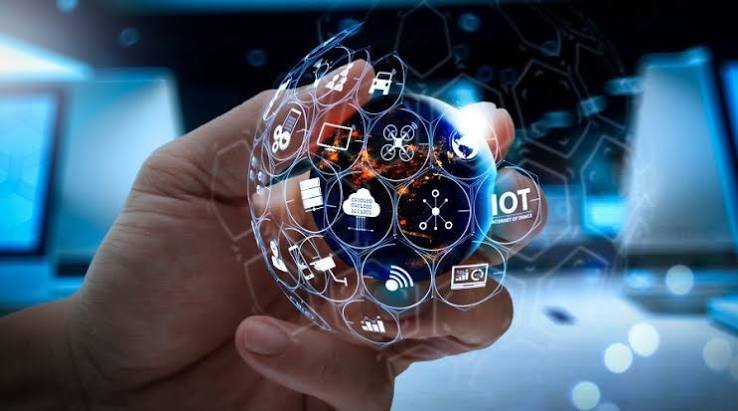
Technology has a remarkable way of moving from science fiction into ordinary life.
A device or invention can seem experimental today and become something millions of people use a few years later. Smartphones, wireless earbuds, GPS navigation, video calls, and smart home devices are all examples of technologies that once seemed futuristic but are now part of everyday routines.
Today, another wave of innovation is developing.
Artificial intelligence is becoming more capable and increasingly moving beyond traditional software. Robots are learning to operate in more complex environments. Wearable devices are becoming smarter. New energy technologies could change how homes and vehicles interact with electricity. Advances in biotechnology could transform healthcare, while quantum technologies may eventually change how some difficult problems are solved.
These developments are not guaranteed to succeed exactly as predicted.
However, they are worth watching because they have the potential to change how people live, work, communicate, travel, stay healthy, and interact with technology.
The emerging technologies that could change everyday life are not limited to one industry. They span artificial intelligence, robotics, healthcare, energy, computing, transportation, communication, and consumer electronics.
Let’s explore some of the most interesting technologies that could shape everyday life in the years ahead.
What Are Emerging Technologies?
Emerging technologies are innovations that are still developing but show potential for significant real-world impact.
Some are brand new.
Others have existed for years but are now reaching a stage where improvements in cost, performance, or accessibility could allow them to become more widely adopted.
The World Economic Forum’s 2026 emerging-technology report identifies technologies approaching real-world impact across areas including energy, healthcare, materials, and computing. WWorld Economic Forum+1
The important point is that an emerging technology does not necessarily become mainstream.
Some technologies remain experimental.
Others find unexpected applications.
And some disappear as better alternatives emerge.
The technologies below are worth watching because they have the potential to move beyond laboratories and specialized industries into everyday experiences.
1. Artificial Intelligence Will Become More Personal
Artificial intelligence is already part of many people’s daily lives.
It powers search, recommendations, translation, photography, customer service, navigation, and productivity tools.
But the next phase of AI could be much more personal.
Instead of simply responding to individual questions, AI systems may increasingly understand a person’s preferences, routines, goals, and context.
An AI assistant could potentially help organize a schedule, summarize information, prepare documents, manage reminders, and interact with other applications.
This could make technology feel less like a collection of separate apps and more like one connected assistant.
AI Could Become an Everyday Interface
Today, people often need to learn how individual applications work.
In the future, users may simply describe what they want.
Instead of opening several applications to complete a task, someone could tell an AI system the goal and allow it to coordinate the necessary steps.
This is one reason AI agents are attracting so much attention.
2. AI Agents Could Handle Routine Tasks
AI agents are designed to perform multiple actions rather than simply provide answers.
For example, an AI agent might gather information, organize it, interact with software, and complete parts of a workflow.
Businesses are particularly interested in this possibility because many office tasks involve repetitive processes.
IEEE’s 2026 technology predictions identify AI agents as a major development, with the potential to reduce routine work in business environments. IIEEE Computer Society
For consumers, AI agents could eventually help with tasks such as planning trips, organizing appointments, comparing options, or managing digital information.
The technology still needs strong safeguards.
An AI system that can take action needs appropriate permissions, security, and human oversight.
3. Wearable AI Could Change How We Interact With Technology
Smartphones require people to look at a screen.
Wearable AI could make digital assistance more hands-free.
Smart glasses, AI-enabled earbuds, smartwatches, and other wearable devices can potentially provide information without requiring users to constantly reach for their phones.
Wearable AI could assist with communication, navigation, translation, accessibility, reminders, and productivity.
The World Economic Forum has highlighted the potential for wearable AI to provide hands-free, context-aware assistance in areas such as travel, communication, productivity, and accessibility. WWorld Economic Forum
Smart Glasses Are Particularly Interesting
Smart glasses could eventually display useful information within a person’s field of view.
Imagine walking through a new city and receiving navigation guidance without constantly checking your phone.
Or imagine looking at a foreign-language sign and receiving an instant translation.
These experiences are becoming technically more achievable.
Challenges involving battery life, privacy, comfort, cost, and social acceptance will determine how widely such products are adopted.
4. Physical AI Could Bring Intelligence Into the Real World
For years, AI primarily existed inside computers and software.
Now it is increasingly being combined with physical machines.
This is often described as physical AI.
Physical AI allows systems to perceive and interact with real-world environments through sensors, cameras, robotics, and other hardware.
Forrester’s 2026 emerging-technology research identifies physical AI and robotics as important areas as artificial intelligence moves beyond purely digital workflows. FForrester+1
This could eventually affect homes, factories, warehouses, transportation, healthcare, and many other environments.
5. Robots Could Become Everyday Helpers
Robots have traditionally been associated with factories.
That is changing.
Advances in AI, sensors, computer vision, batteries, and mechanical design are allowing robots to perform increasingly complex tasks.
Future robots could assist with:
- Cleaning
- Delivery
- Warehousing
- Agriculture
- Manufacturing
- Elder care
- Construction
- Household tasks
General-purpose robots are also being studied as a technology that could have broader effects on everyday life. A 2026 U.S. Government Accountability Office report identifies general-purpose robots as one emerging technology with potentially significant social and environmental effects. GGAO
Household robots may take time to become affordable and reliable enough for widespread adoption, but the direction is worth watching.
6. Smart Homes Could Become More Autonomous
Smart home technology is moving beyond remote control.
Early smart homes allowed people to turn lights on or off with an app.
Future systems could become much more proactive.
AI could allow a home to understand routines and automatically adjust connected devices.
For example, a home might manage:
- Lighting
- Heating and cooling
- Security
- Appliances
- Entertainment
- Energy consumption
The goal would be to reduce the amount of manual control required.
Instead of telling the house what to do, users could establish preferences and let the system handle routine decisions.
7. Everything-to-Grid Energy Could Change How Homes Use Power
One of the particularly interesting emerging energy technologies is the concept of everything-to-grid energy.
The idea is that buildings, electric vehicles, batteries, factories, and other systems could both consume and supply electricity.
For example, an electric vehicle could store energy and potentially send some of that electricity back to the grid when demand is high.
The World Economic Forum included everything-to-grid energy among its 2026 emerging technologies, highlighting its potential to improve energy resilience and make better use of stored renewable electricity. WWorld Economic Forum
This could eventually change the relationship between households and electricity networks.
A home might not simply consume electricity.
It could become a small part of the energy system.
8. Advanced Battery Technology Could Transform Daily Life
Batteries are becoming increasingly important.
They power smartphones, laptops, electric vehicles, home energy-storage systems, and countless other devices.
Better battery technology could mean:
- Longer-lasting smartphones
- Faster charging
- Longer-range electric vehicles
- More reliable renewable energy storage
- Smaller wearable devices
- More capable robots
Battery innovation is therefore not simply about electric cars.
It could affect nearly every area of consumer technology.
9. Direct Lithium Extraction Could Support the Battery Economy
Lithium is an important material for many modern batteries.
Traditional lithium extraction can take considerable time and resources.
Direct lithium extraction is being developed as a way to extract lithium from brines more efficiently.
The World Economic Forum lists direct lithium extraction among its 2026 emerging technologies, noting that newer approaches can potentially reduce land and water requirements compared with some conventional methods. WWorld Economic Forum
If these technologies scale successfully, they could help support growing demand for batteries and energy storage.
10. Passive Cooling Could Make Buildings More Efficient
Cooling buildings requires large amounts of electricity, especially in hot climates.
One emerging approach involves materials designed to cool surfaces without consuming electricity.
These materials can reflect sunlight and release heat into the atmosphere.
The World Economic Forum’s 2026 emerging-technology list includes passive radiative cooling materials as a technology with potential applications in buildings and equipment. WWorld Economic Forum+1
If widely adopted, passive cooling could help reduce energy consumption.
11. Personalized Medicine Could Become More Precise
Healthcare is another area where emerging technology could have a major impact.
Traditional treatments often rely on approaches that work for many people.
Personalized medicine aims to tailor treatment to individual biological characteristics.
Advances in genetics, AI, biological analysis, and drug development could make personalized treatments more practical.
The World Economic Forum’s 2026 report highlights personalized mRNA cancer vaccines as one emerging area with potential to transform treatment. WWorld Economic Forum
The goal is not simply to develop stronger medicines.
It is to develop treatments that are better matched to individual patients.
12. AI Could Accelerate Drug Discovery
Developing new medicines can take years and require enormous amounts of research.
AI is increasingly being used to analyze biological data and help researchers identify promising candidates.
AI can potentially examine relationships between molecules, proteins, diseases, and treatments much faster than traditional manual approaches.
The World Economic Forum notes that AI is increasingly helping researchers model biological processes and identify promising drug candidates before physical experiments take place. WWorld Economic Forum
This does not mean AI can replace scientists.
Instead, it can provide another tool for exploring complex biological problems.
13. Exosome Drug Delivery Could Improve Treatments
Exosomes are tiny biological structures that cells use to communicate.
Researchers are exploring their potential as delivery systems for medicines and biological materials.
The World Economic Forum included exosome drug delivery among its 2026 emerging technologies. WWorld Economic Forum
If research progresses successfully, exosome-based approaches could eventually help deliver certain treatments more precisely.
This is an area that remains primarily within medical research, but its potential is significant.
14. Precision Fermentation Could Change Food Production
Food technology is also evolving.
Precision fermentation uses microorganisms to produce specific ingredients.
It could potentially create proteins and other food components without relying entirely on traditional animal agriculture.
Potential applications include alternative dairy proteins, nutritional ingredients, and other specialized foods.
The World Economic Forum identifies precision fermentation as one of its emerging technologies for 2026, particularly because it could support new approaches to food production. WWorld Economic Forum
For consumers, the result could eventually be a wider variety of food choices.
15. Quantum Technologies Could Improve Security and Computing
Quantum technology is often associated with quantum computers.
But the field is broader than that.
Quantum technologies may also affect communications, sensing, measurement, and security.
One particularly important area is quantum-resistant cryptography.
As quantum computing develops, organizations are preparing for the possibility that some existing encryption methods could eventually become vulnerable.
The World Economic Forum lists lattice-based cryptography among its 2026 emerging technologies as part of the move toward quantum-resistant security. WWorld Economic Forum
For ordinary users, these changes may happen mostly behind the scenes.
16. World Models Could Give AI Better Understanding of Reality
Another emerging AI concept is the world model.
A world model attempts to represent how environments work so that an AI system can predict what may happen when conditions change.
This could be particularly useful for robotics, autonomous vehicles, simulation, and scientific research.
Instead of simply recognizing objects, an AI system could develop a more useful internal representation of how objects and environments interact.
The World Economic Forum included world models among its 2026 emerging technologies. WWorld Economic Forum
17. Autonomous Transportation Could Become More Common
Self-driving cars receive most of the attention, but autonomous transportation includes much more.
Drones, delivery robots, warehouse vehicles, agricultural machines, and other autonomous systems are also developing.
These technologies combine sensors, software, connectivity, and AI.
As reliability improves, autonomous systems could perform more transportation and delivery tasks.
This could affect logistics, public transportation, agriculture, and personal mobility.
18. Digital Twins Could Improve Cities and Infrastructure
A digital twin is a digital representation of a physical object or system.
A city, factory, building, machine, or transportation network can potentially be represented digitally.
Real-world sensor data can then be used to update the model.
This can help organizations understand how systems operate and test potential changes before implementing them.
For example, a city could simulate traffic changes before modifying roads.
A factory could test maintenance scenarios without stopping production.
Digital twins could become increasingly valuable as sensors and AI improve.
19. Brain-Computer Interfaces Could Change Accessibility
Brain-computer interfaces aim to create a communication pathway between brain activity and external technology.
The field is still developing, but researchers are exploring applications involving communication, movement, accessibility, and human-computer interaction.
The U.S. Government Accountability Office lists neural implants for human augmentation among emerging technologies with potentially transformative applications, while also highlighting important privacy and security concerns. GGAO
For everyday consumers, widespread adoption may still be far away.
But the technology could eventually provide new options for people with certain disabilities.
20. Advanced Accessibility Technology Will Help More People
Technology can make everyday activities easier for people with disabilities.
AI-powered systems can provide:
- Automatic captions
- Speech-to-text
- Text-to-speech
- Image descriptions
- Voice control
- Translation
- Navigation assistance
Wearable AI could make some of these features more convenient by providing assistance without requiring constant interaction with a phone or computer.
As technology becomes more context-aware, accessibility tools could become more personalized.
21. AI-Powered Translation Could Reduce Language Barriers
Language translation has improved significantly through machine learning.
Future systems could provide more natural real-time translation during conversations.
This could make travel easier.
It could help international teams communicate.
It could improve access to education and information.
Translation technology may eventually become a standard feature of everyday communication devices.
22. Smart Agriculture Could Change How Food Is Grown
Agriculture is increasingly using technology to improve efficiency.
Sensors, drones, satellite imagery, robotics, AI, and automated irrigation systems can provide farmers with more information about crops and soil.
Instead of treating an entire field identically, farmers can potentially respond to the specific conditions of different areas.
This can help optimize water, fertilizer, labor, and other resources.
As climate pressures increase, smart agriculture could become increasingly important.
23. AI-Powered Education Could Personalize Learning
Education is another area where AI could have a significant impact.
Traditional classrooms often require teachers to work with groups of students who have different learning speeds and needs.
AI tools can potentially provide personalized explanations, practice exercises, feedback, and learning recommendations.
Teachers would remain essential.
AI could simply provide additional support.
The most useful educational technology will likely combine automated assistance with human teaching.
24. Technology Will Make More Decisions in the Background
Perhaps the biggest change will be invisible.
Technology is increasingly moving from systems that wait for instructions to systems that anticipate needs.
Your phone may organize information.
Your home may adjust itself.
Your car may assist with driving.
Your wearable may provide context.
Your AI assistant may organize tasks.
Your energy system may optimize consumption.
This means technology could become less visible while becoming more influential.
The Benefits of Emerging Technology
Emerging technologies could provide several major benefits.
Greater Convenience
Automated systems can reduce the number of repetitive tasks people need to perform.
Better Healthcare
AI, biotechnology, and personalized medicine could lead to more targeted treatments.
Improved Accessibility
Wearables, AI assistants, and interfaces could help people interact with technology more easily.
More Efficient Energy Use
Smart grids, better batteries, and energy-management systems could reduce waste.
Increased Productivity
AI and automation could allow people to spend more time on creative and high-value work.
Better Connectivity
Translation, communication platforms, and connected devices could make it easier for people to collaborate across borders.
The Risks and Challenges
Emerging technology also creates serious questions.
Privacy is one of the biggest.
AI assistants and connected devices may have access to large amounts of personal information.
Security is another concern.
As more devices become connected, there are more systems that need protection.
There are also economic and social questions.
Automation could change jobs.
Advanced technologies may initially be expensive.
Not everyone will have equal access.
And some technologies may produce unexpected consequences.
Responsible development will therefore be just as important as innovation.
How People Can Prepare for Emerging Technology
You don’t need to become an expert in every new technology.
Instead, focus on understanding the technologies most likely to affect your life.
Learn basic AI skills.
Improve your cybersecurity habits.
Understand how connected devices collect information.
Explore useful productivity tools.
Pay attention to developments in your industry.
Most importantly, remain willing to learn.
Technology changes quickly, and the ability to adapt is often more valuable than knowing one particular tool.
What Will Everyday Life Look Like in the Future?
It is difficult to predict exactly how these technologies will develop.
Some will become mainstream.
Others will remain specialized.
A few may disappear entirely.
But the overall direction is clear.
Technology is becoming more intelligent, connected, personalized, autonomous, and integrated into the physical world.
The smartphone may become less central as wearable AI grows.
Homes may become more automated.
Robots may perform more physical tasks.
Healthcare may become more personalized.
Energy systems may become more flexible.
AI may become a normal part of everyday decision-making.
Conclusion
The future of technology is being shaped by many emerging innovations.
Artificial intelligence and AI agents could change how people interact with software.
Physical AI and robotics could bring intelligent machines into homes, workplaces, warehouses, and public environments.
Wearable AI could provide hands-free digital assistance.
Smart homes and everything-to-grid energy systems could change how households interact with energy.
Advances in biotechnology could improve personalized medicine, drug delivery, and food production.
Quantum technologies could influence computing and cybersecurity.
Autonomous transportation, digital twins, smart agriculture, and AI-powered education could also become increasingly important.
Some of these technologies are already entering the real world.
Others are still being developed in laboratories and research environments.
The important thing is not to assume that every prediction will come true.
Instead, we should watch how these technologies develop and consider how they can be used responsibly.
The most valuable innovations will not necessarily be the ones that look the most futuristic.
They will be the technologies that solve real problems.
If emerging technology can save time, improve health, reduce energy waste, increase accessibility, make communication easier, or help people make better decisions, it has a good chance of becoming part of everyday life.
The future may therefore arrive gradually rather than all at once.
One smart feature, one useful device, one automated task, and one scientific breakthrough at a time.
And before we realize it, many of today’s emerging technologies may become as ordinary as the smartphone sitting in our hands today.
Frequently Asked Questions About Emerging Technologies
What are emerging technologies?
Emerging technologies are new or developing innovations that have the potential to create significant changes in society, business, science, or everyday life.
What emerging technology will have the biggest impact?
Artificial intelligence is likely to have one of the broadest impacts because it can be integrated into software, robotics, healthcare, education, transportation, and consumer products.
What is physical AI?
Physical AI refers to artificial intelligence that operates through physical systems such as robots, vehicles, machines, and sensors. It allows AI to interact with real-world environments. FForrester
Will robots become common in homes?
Robots may become more common as AI, sensors, batteries, and mechanical systems improve. However, affordability, reliability, safety, and usefulness will determine how quickly household robots become mainstream.
What is wearable AI?
Wearable AI refers to artificial intelligence integrated into devices such as smart glasses, earbuds, watches, and other wearable products. These devices can provide hands-free assistance and context-aware features.
Could AI change healthcare?
Yes. AI can assist with analyzing information, researching potential treatments, identifying patterns, and supporting personalized medicine. Human medical professionals will remain essential for clinical judgment and patient care.
What is everything-to-grid energy?
Everything-to-grid energy is an approach in which buildings, vehicles, batteries, factories, and other systems can potentially both consume electricity and supply stored electricity back to the grid. WWorld Economic Forum
What is quantum technology?
Quantum technology uses principles of quantum physics for applications involving computing, communications, sensing, measurement, and security.
Could emerging technology replace jobs?
Some technologies will automate specific tasks, which can change the responsibilities associated with certain jobs. At the same time, new technologies can create new roles and industries. Workers who develop adaptable digital skills may be better prepared for these changes.
How will smart homes change in the future?
Smart homes may become more autonomous, using AI to understand routines and automatically manage lighting, heating, cooling, security, appliances, and energy consumption.
What technologies could improve accessibility?
AI-powered speech recognition, automatic captions, image descriptions, voice controls, wearable AI, translation tools, and brain-computer interfaces could all contribute to improved accessibility.
How can people prepare for new technology?
Learn basic digital and AI skills, practice good cybersecurity habits, understand privacy settings, follow reliable technology news, and remain open to learning new tools as they become useful.
Are all emerging technologies guaranteed to succeed?
No. Some emerging technologies fail to achieve widespread adoption because of cost, technical limitations, regulation, safety concerns, or competition from better alternatives. Emerging technology should therefore be viewed as an area of potential rather than certainty.
What will everyday technology look like in the future?
Everyday technology is likely to become more intelligent, personalized, connected, and automated. AI assistants, wearable devices, smart homes, robots, autonomous systems, and advanced energy technologies could gradually become part of ordinary routines.